 Newspatrolling.com News cum Content Syndication Portal Online
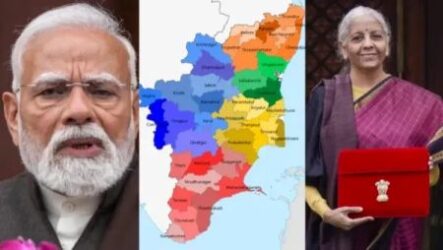 The latest Union Budget, presented by Finance Minister Nirmala Sitharaman, lays out an expansive development plan for Tamil Nadu, focusing on infrastructure, industrial growth, and cultural promotion. The announcements indicate a renewed push by the Central Government to accelerate the state’s economic momentum.
Major Focus on Connectivity and Railways
Infrastructure development remains central to long-term growth, and transport connectivity features prominently in the new proposals.
Two high-speed rail corridors have been proposed — the Chennai–Bengaluru route and the Hyderabad–Chennai corridor. These links are expected to significantly cut travel time between key southern economic hubs, boosting trade, improving workforce mobility, and encouraging cross-sector investments if completed on schedule.
Railway funding for Tamil Nadu has also seen a substantial rise. During the UPA years, the state received an average of ₹879 crore annually for railway works. Current allocations now exceed ₹6,600 crore, marking a sharp increase. The enhanced funding is expected to fast-track pending upgrades, track doubling projects, station modernisation, and safety enhancements across the network.
Push for Industry and Job Creation
The budget outlines targeted measures to strengthen manufacturing and technology-led growth within the state.
A ₹10,000 crore fund has been proposed to support Micro, Small and Medium Enterprises (MSMEs). Industrial centres such as Coimbatore and Tiruchirappalli are likely to benefit from improved credit access and operational assistance. Given that MSMEs form the backbone of employment in Tamil Nadu, better liquidity could translate into expanded production and new job opportunities.
The state has also been positioned as an important player in the Indian Semiconductor Mission. Under the next phase, Tamil Nadu is expected to attract investments in chip design and manufacturing. This initiative could create opportunities for engineers and skilled professionals, particularly in Chennai’s growing technology ecosystem.
Traditional industries have not been left out. Incentives for textile manufacturing and support for coconut and cashew farmers have been included. The Marine Fisheries project has also received priority, aiming to upgrade infrastructure and improve income prospects for coastal communities.
Cultural and Eco-Tourism Initiatives
Beyond industrial growth, the budget emphasises heritage conservation and sustainable tourism.
Adichanallur, a historically significant archaeological site, is set to be developed into a prominent cultural destination with a dedicated museum. This move could enhance tourism while preserving the region’s rich past.
Eco-tourism proposals include a bird trail at Pulicat Lake and a trekking route in the Kolli Hills. These initiatives are designed to promote environmentally responsible tourism while generating livelihoods for local residents.
Challenges and Industry Outlook
While the announcements have been widely noted, timely implementation remains critical. Delays related to land acquisition and regulatory approvals could pose obstacles. Political debates over credit for centrally funded schemes also continue.
Industry bodies, however, have largely welcomed the proposals. Technology professionals view the semiconductor push as a gateway to global investment, while manufacturing associations believe improved financing and rail connectivity will lower logistics costs and enhance regional trade.
Overall, the Union Budget outlines a broad development strategy for Tamil Nadu. The true impact, however, will depend on efficient execution and coordination between the Centre and the state.
Reference : https://www.oneindia.com/chennai/big-push-for-tamil-nadu-as-centre-announces-major-infrastructure-projects-8013027.html