 Newspatrolling.com News cum Content Syndication Portal Online
 Uttarakhand has introduced its first dedicated Women Policy, establishing a comprehensive roadmap to enhance women’s participation in employment, governance, entrepreneurship, and overall economic development across the state. The policy reflects a long-term commitment to strengthening women’s role in shaping Uttarakhand’s social and economic progress.
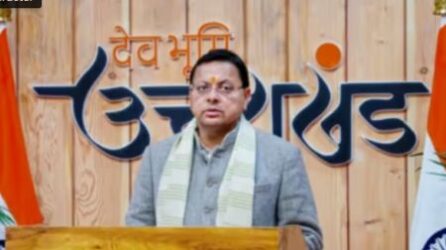
The initiative aligns with the vision of Uttarakhand Chief Minister Pushkar Singh Dhami, whose government has consistently introduced reforms focused on expanding opportunities for women, improving access to public institutions, and encouraging inclusive growth. The newly approved policy brings these efforts under a unified framework, aiming to create an enabling environment where women can contribute more actively across sectors.
A key feature of the policy is its emphasis on increasing women’s participation in local governance. Under the new framework, Mahila Sabhas will be established at the Gram Panchayat level, providing women with a dedicated platform to voice their concerns, share ideas, and participate in grassroots decision-making. These forums are expected to strengthen women’s representation in village development plans and encourage greater involvement in local governance processes.
The policy also builds upon several initiatives that have already expanded women’s representation in public institutions. Uttarakhand has implemented 30 per cent horizontal reservation for women in government jobs, a measure that has significantly improved women’s access to public employment. The reservation policy has not only increased female participation in government services but has also contributed to greater financial security and economic independence for countless households across the state.
In addition, the government has introduced 33 per cent reservation for women in cooperative societies, extending their participation into community-based economic institutions. This move enables women to play a stronger role in decision-making within cooperative organisations, allowing them to contribute directly to grassroots economic development while strengthening leadership opportunities beyond conventional governance structures.
Beyond representation, Uttarakhand has also focused on creating sustainable livelihood opportunities for women through targeted welfare and entrepreneurship programmes. One notable initiative is the Mahila Saarthi Yojana, launched as a pilot project in Dehradun. The scheme enables women to become drivers of auto-rickshaws and two-wheelers, opening up new avenues of employment in sectors traditionally dominated by men. By generating independent sources of income, the programme promotes both financial empowerment and greater self-reliance.
Several other flagship schemes are further strengthening the state’s women-centric development agenda. Programmes such as Lakhpati Didi, Mukhyamantri Sashakt Bahna Utsav Yojana, Ekal Mahila Swarozgar Yojana, and Drone Didi are helping women build sustainable livelihoods through skill development, entrepreneurship, and self-employment opportunities. These initiatives encourage women to adopt new technologies, establish businesses, and diversify their sources of income, contributing to stronger local economies and improved household well-being.
Together, these interventions reflect a broader strategy that goes beyond welfare by focusing on long-term empowerment through participation, employment, and enterprise. The newly approved Women Policy provides a structured framework that integrates these existing initiatives while identifying new pathways to increase women’s involvement across governance, economic activities, and community development.
With the introduction of this dedicated Women Policy, Uttarakhand has taken another significant step towards advancing a women-led development model. By combining policy support, institutional representation, employment opportunities, and entrepreneurship initiatives, the state aims to create a more inclusive and equitable growth trajectory. The policy reinforces the idea that empowering women is central to sustainable development and positions Uttarakhand among the states working to expand women’s leadership and economic participation in meaningful and lasting ways.
Reference: https://www.oneindia.com/india/uttarakhand-s-women-policy-marks-a-new-chapter-in-women-led-growth-8129077.html