 Newspatrolling.com News cum Content Syndication Portal Online
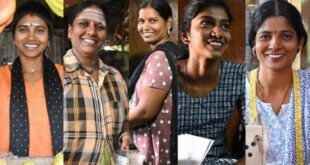
In a village of Baihar block, Balaghat district, a group of women sat in a circle, deep in discussion. At first glance, it might resemble a routine social gathering but a step closer, told a different story- one of moisture calibration in wild honey, price trends in Raipur’s markets, and logistics planning for jaggery transport. It was like a boardroom of the beneficiaries.
What changed in Balaghat was not just income levels but the identity. Women who were once seen as passive participants in development were now economic decision-makers, quality controllers, and business leaders.
At the heart of this transformation was the Project WEE (Women Economic Empowerment), locally known as Swayamshree. It has been designed to impact 55,000 women across nine blocks of Balaghat and over 400 villages, the initiative operates in a district marked by tribal populations, forest-based livelihoods, and rain-fed agriculture. The ambition was to create Lakhpati Didis through diversified value chains such as paddy, turmeric, goat rearing, and forest produce.
But what distinguished WEE was its strategic pivot. While many livelihood programs focused on production, WEE shifted equal attention to markets, institutions, and control over income. Women were selling smarter, negotiating better, and collectively shaping market outcomes.
The real engine of this change lied in a tiered institutional structure: Self-Help Groups (SHGs) as the foundational social units, Producer Groups (PGs) as village-level economic institutions and Farmer Producer Company (FPC) as the market-facing enterprise. This architecture transformed scattered producers into organized economic actors.
The most powerful learning under WEE came from transactions. If we consider paddy procurement, over three years, PGs collectively marketed 1,700 tonnes of paddy; equivalent to nearly 30 railway wagons. Similarly, inward marketing was aggregating demand for essentials like pulses, jaggery, turmeric & seeds, and it redefined how rural households accessed markets. By pooling demand, women secured better prices and reduce dependency on exploitative intermediaries.
However, early procurement cycles were marked by hesitation where women were unsure about selecting seed varieties, reluctant to invest advance payments and dependent on male family members for decisions. But with each cycle, the confidence grew. Participation evolved into ownership and what began as cautious engagement has matured into informed leadership.
Timely payments to farmers built trust while quick recovery from buyers ensured continuity. One of the most resilient solutions has been internal: monthly savings of ₹50 by each member. This seemingly small contribution had helped in building capital, which further led to ownership, accountability, and independence.
Another defining shift was the rise of technical expertise among women. From testing moisture content in grains to identifying fraudulent packaging practices, women were mastering the technical nuances of trade. It protected margins, strengthened negotiation power, and transformed PGs into credible market actors.
Partnerships that Enabled Scale
The transformation in Balaghat was the result of a carefully orchestrated partnership ecosystem, where convergence with government departments amplified impact. Vaccination drives and collaboration with agricultural extension system with the Department of Animal Husbandry & Dairying, Madhya Pradesh- State Rural Livelihoods Mission (MPSRLM), district administration of Balaghat and the Agricultural Technology Management Agency (ATMA) in Balaghat have reduced livestock mortality and enabled natural farming clusters.
What unfolded in Balaghat went far beyond economic indicators. When a woman decides which seed variety to buy, negotiates prices with traders, or manages a collective’s finances, she is not just increasing her income, she is redefining her role within the household and community. Her journey is a journey of- power to decide, power to negotiate and power to lead.
Balaghat has offered a compelling blueprint for rural development. It showed that real transformation happens not when people are given resources, but when they are given institutions, agency, and market access.
In these villages, the most important change was not visible in infrastructure or output volumes, but visible in which women discussed markets, managed risks, and planned for growth.
BY: Ankit Tandon, Team Coordinator, PRADAN