 Newspatrolling.com News cum Content Syndication Portal Online
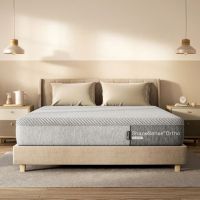 Buying a mattress online in India means navigating a set of labels that sound like specifications but are not. Orthopedic. Premium foam. Multi-layer comfort. High-resilience. None of these terms have a regulated definition in India. A manufacturer can apply any of them to any product without meeting a test, a density threshold, or a construction standard. The result is that two buyers spending Rs 14,000 each on mattresses described in identical language can end up with products that perform completely differently – one lasting eight years, one sagging by month eighteen. The difference is invisible at the time of purchase. It is built into the foam before the mattress ever leaves the factory, and it only shows up after the first year of use. This guide explains which numbers in a listing are real specifications and which are just names.
Why does the orthopedic label tell you almost nothing about the mattress inside?
In regulated markets – primarily the United States – an orthopedic mattress label requires endorsement from a medical or chiropractic board, with defined construction requirements. In India, no such regulation exists. Any manufacturer can describe any product as orthopedic. The word has become shorthand for firm and positioned for back support, but it does not guarantee foam density, layer construction, or lifespan. Two mattresses both labelled orthopedic – one at Rs 9,000, one at Rs 22,000 – can have base foam densities of 28 kg/m3 and 52 kg/m3 respectively. The first will compress within 18 months. The second will hold its shape for a decade. Same label, completely different build.
The reason brands avoid publishing density numbers is exactly this: it immediately reveals where the cost was cut. A double bed base layer in 28 kg/m3 foam costs a manufacturer roughly Rs 1,800 to 2,400. The same base at 52 kg/m3 costs Rs 5,500 to 7,000. The difference shows up nowhere in the marketing and everywhere in the mattress after year one.
What is the density-firmness confusion, and why does it keep costing buyers?
Most people assume a firmer mattress is a denser mattress. This is wrong, and it is expensive to be wrong about. Density is a measure of how much foam material is packed per cubic metre. Firmness is a measure of how the foam responds to pressure. They are engineered independently. A 28 kg/m3 foam can be manufactured at any firmness. So can a 65 kg/m3 foam. A firm feel on a low-density base will still collapse by the second year, because firmness is about the surface response, not the structural durability.
This confusion is most costly in the Rs 10,000 to 15,000 range. Mattresses at this price frequently use memory foam, which is technically accurate, but at densities between 35 and 40 kg/m3. Memory foam at this density has the characteristic slow-recovery feel, which buyers associate with quality. What they do not see is that 52 kg/m3 is the threshold where memory foam actually delivers long-term durability. Below it, the compression timeline is roughly the same as standard PU foam. The slow-recovery feel is real. The longevity is not.
Which two numbers in a mattress listing are the ones worth reading?
Base foam density in kg/m3. And layer count, with each layer individually identified by composition and thickness.
Base density is the structural specification. It determines how many years the mattress holds its shape under two adults sleeping on it nightly. At 28 to 32 kg/m3, visible compression appears within 12 to 18 months. At 40 kg/m3, the timeline extends to four to six years. At 52 kg/m3 and above, quality construction holds for eight to twelve years. If a listing gives you this number, the brand built to a specification. If it does not, that silence is itself information.
Layer count tells you whether the mattress can do more than one job at once. A single-layer mattress optimised for firmness cannot simultaneously provide pressure relief for side sleepers. A three-layer construction – comfort layer at the surface, transitional middle layer, high-density support base – allows each layer to be engineered for a different function: pressure distribution, load transition, and structural durability. Brands that build to this standard list each layer separately. A listing that says three-layer premium foam without individual specifications is a marketing description, not a construction sheet.
What does each foam type actually deliver at different densities?
| Foam Type | Density to Look For | Realistic Lifespan | Best Suited For |
| PU foam | 40 kg/m3 minimum | 4-6 years | Budget range, occasional use bedrooms |
| HR foam | 40 kg/m3 minimum | 6-8 years | Non-AC bedrooms, warm climates |
| Memory foam (standard density) | 40-52 kg/m3 | 4-6 years | Single occupancy, light use |
| Memory foam (high density) | 52 kg/m3 and above | 8-12 years | Daily use, couples, back support |
| Latex | Ask for ILD value (not density) | 12-18 years | Back pain priority, allergy-sensitive sleepers |
ILD – Indentation Load Deflection – is the standardised firmness number. It measures how many pounds of force it takes to compress the foam 25% at a 50 square inch surface. For general use, 25 to 35 ILD is medium-firm. For back support and orthopaedic use, 35 to 45 ILD. A listing with a specific ILD number was built to a tested standard. A listing that says firm, extra firm, or orthopaedic firm without an ILD value is self-assessed and unmeasured.
What three questions settle any mattress purchase before you click buy?
Ask the brand: what is the base layer foam density in kg/m3? Any brand that built to a specification knows this number. A response using language like premium orthopaedic foam or high-resilience construction without a number means the density is either low enough to be embarrassing or genuinely unknown. Both are the same outcome for the buyer.
Ask: how many layers, and what is each layer’s material and thickness? Individually listed layers are a construction spec. A vague multi-layer description is not.
Ask: what is the ILD or hardness value? For a mattress marketed for back support, this determines whether the firmness is consistent at the support zone under full body weight – not just at the surface on first touch. Without it, the firmness claim has no basis.
Three questions, three numbers. Brands that can answer all three built the mattress to a specification. For a range where foam density, layer construction, and firmness values are listed per product – so comparisons can be made on specifications rather than on labels – the orthopedic bed mattress range at Wakefit covers memory foam and HR foam options across single, double, queen, and king sizes with construction details on each product page.